Counting Coins Worksheets
Best for: 1st to 3rd grade
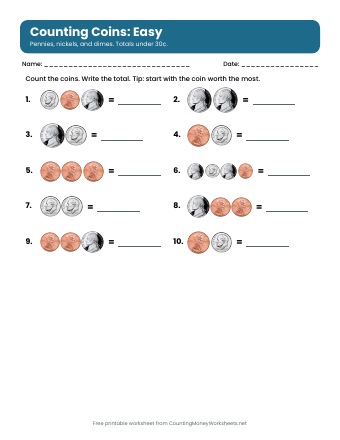
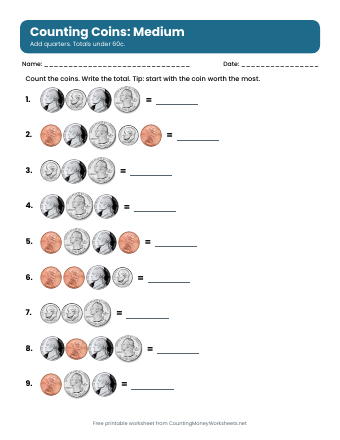
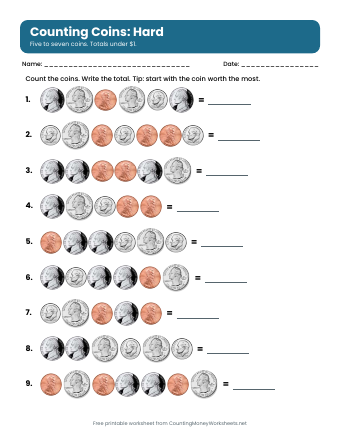
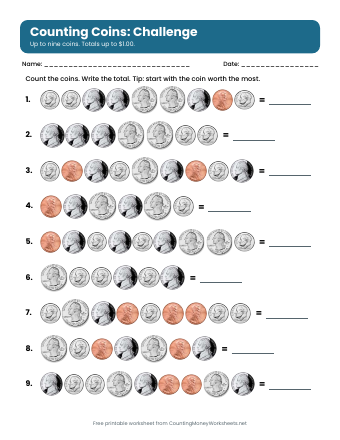
Now everything comes together: each problem mixes pennies, nickels, dimes, and quarters, and kids find the total. The sets go from easy (small totals, fewer coins) to challenging (totals up to one dollar), so you can match the sheet to your child.
Printable worksheets
The cashier's method
- Point to the biggest coins first (quarters), then dimes, nickels, and pennies last.
- Count up as you go: "25, 50, 60, 65, 66."
- Write the total with a cent sign, or as dollars and cents once your child is ready (66¢ or $0.66).
Each PDF includes an answer key on page 2.
Play Coin Count DashOur free counting money game: count the coins as fast as you can!Play the gameFrequently asked questions
What order should kids count mixed coins in?
Start with the coin worth the most and work down: quarters, then dimes, nickels, and pennies. Counting up from the biggest values reduces mistakes.
When do kids learn to count money in school?
In the U.S. Common Core standards, solving problems with dollar bills, quarters, dimes, nickels, and pennies is part of 2nd grade math (standard 2.MD.C.8), but many children start counting coins earlier.