Coin Identification Worksheets
Best for: Kindergarten to 1st grade
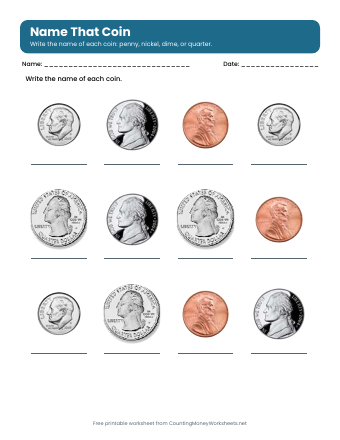
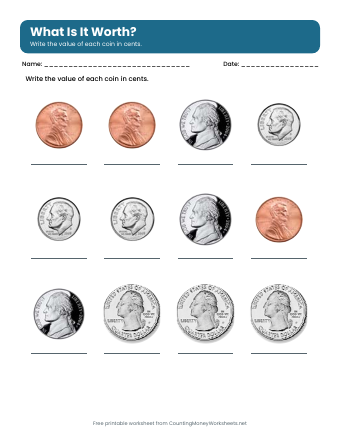
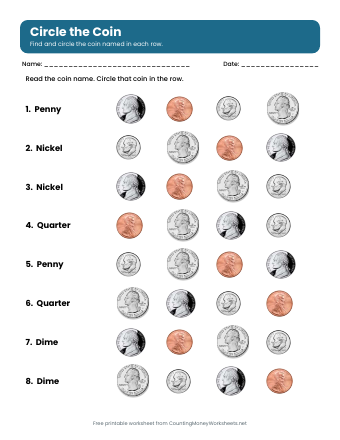
Before kids can count money, they need to know the coins. These worksheets practice the basics: what each coin is called, what it is worth, and how to tell the look-alikes apart. The penny is easy because of its copper color, but the silver coins take practice.
Printable worksheets
Coin facts to say out loud
- Penny: 1 cent. The only copper-colored coin.
- Nickel: 5 cents. Bigger and thicker than a dime, with a smooth edge.
- Dime: 10 cents. The smallest coin, but worth more than a penny or nickel.
- Quarter: 25 cents. The biggest of the four, with a ridged edge.
A free coin values chart is a handy poster for the fridge or classroom wall while kids learn.
Each PDF includes an answer key on page 2.
Play Coin Count DashOur free counting money game: count the coins as fast as you can!Play the gameFrequently asked questions
At what age should kids learn to identify coins?
Many children start recognizing coins around age 5 or 6. Most school programs introduce coin names and values in kindergarten or 1st grade.
What is the easiest way to tell a nickel from a quarter?
Size and edge. The quarter is bigger and has a ridged edge, while the nickel is smaller and has a smooth edge.